Author: admin

  • Measles continues raging in South Carolina; 99 new cases since Tuesday

    Measles continues raging in South Carolina; 99 new cases since Tuesday


    The disease usually develops seven to 14 days after an exposure, but it can take up to 21 days (which is the length of quarantine). Once it develops, it’s marked by a high fever and a telltale rash that starts on the head and spreads downward. People are contagious for four days before the rash develops and four days after it appears. Complications can range from ear infections and diarrhea to encephalitis (swelling of the brain), pneumonia, death in up to 3 out of 1,000 children, and, in very rare cases, a fatal neurological condition that can develop seven to 10 years after the acute infection (subacute sclerosing panencephalitis).

    Two doses of the measles, mumps, and rubella (MMR) vaccine is considered 97 percent effective against the virus, and that protection is considered lifelong. Ninety-nine percent of the 310 cases in the South Carolina outbreak are in people who are unvaccinated, partially vaccinated, or have an unknown vaccination status (only 2 people were vaccinated).

    The Centers for Disease Control and Prevention, which only has data as of January 6, has tallied three confirmed cases for this year (two in South Carolina and one in North Carolina, linked to the South Carolina outbreak). Since then, South Carolina reported 26 cases on Tuesday and 99 today, totaling 125. North Carolina also reported three additional cases Tuesday, again linked to the South Carolina outbreak. In all, that brings the US tally to at least 131 just nine days into the year.

    In 2025, the country recorded 2,144 confirmed cases, the most cases seen since 1991. Three people died, including two otherwise-healthy children. In 2000, the US declared measles eliminated, meaning that it was no longer continuously circulating within the country. With ongoing outbreaks, including the one in South Carolina, the country’s elimination status is at risk.



    Source link

  • That time Will Smith helped discover new species of anaconda

    That time Will Smith helped discover new species of anaconda


    In 2024, scientists announced the discovery of a new species of giant anaconda in South America. A National Geographic camera crew was on hand for the 2022 expedition that documented the new species—and so was actor Will Smith, since they were filming for NatGeo’s new documentary series, Pole to Pole with Will Smith. Now we can all share in Smith’s Amazon experience, courtesy of the three-minute clip above.

    Along with venom expert Bryan Fry, we follow Smith’s journey by boat with a team of indigenous Waorani guides, scouring the river banks for anacondas. And they find one: a female green anaconda about 16 to 17 feet long, “pure muscle.” The Waorani secure the giant snake—anacondas aren’t venomous but they do bite—so that Fry (with Smith’s understandably reluctant help) can collect a scale sample for further analysis. Fry says that this will enable him to determine the accumulation of pollutants in the water.

    That and other collected samples also enabled scientists to conduct the genetic analysis that resulted in the declaration of a new species: the northern green anaconda (Eunectes akayama, which roughly translates to “the great snake”). It is genetically distinct from the southern green anaconda (Eunectes murinus); the two species likely diverged some 10 million years ago. The northern green anaconda’s turf includes Venezuela, Colombia, Suriname, French Guyana, and the northern part of Brazil.

    The female measured between 16 to 17 feet long.

    YouTube/National Geographic

    Will Smith admires the scale sample he helped collect

    YouTube/National Geographic

    Smith’s time in the Amazon also brought the arachnophobic actor face to face with a giant tarantula while scientists extracted the venom. His further adventures brought him to the South Pole, where he trekked across frigid ice fields; to the Himalayas, where he trekked to a small village in Bhutan; to the Pacific Islands to record a lost native language; to the Kalahari desert, where he joined the hunter-gatherer San people on a hunt; and to the North Pole, where he joined an expedition to dive under the ice to collect scientific samples.

    Pole to Pole with Will Smith premieres on January 13, 2026, and will stream on Disney+ the following day.

    Credit:
    National Geographic


    Credit:

    National Geographic


    Source link

  • The oceans just keep getting hotter

    The oceans just keep getting hotter


    Since 2018, a group of researchers from around the world has crunched the numbers on how much heat the world’s oceans are absorbing each year. In 2025, their measurements broke records once again, making this the eighth year in a row that the world’s oceans have absorbed more heat than in the years before.

    The study, which was published Friday in the journal Advances in Atmospheric Science, found that the world’s oceans absorbed an additional 23 zettajoules’ worth of heat in 2025, the most in any year since modern measurements began in the 1960s. That’s significantly higher than the 16 additional zettajoules they absorbed in 2024. The research comes from a team of more than 50 scientists across the United States, Europe, and China.

    A joule is a common way to measure energy. A single joule is a relatively small unit of measurement—it’s about enough to power a tiny lightbulb for a second, or slightly heat a gram of water. But a zettajoule is one sextillion joules; numerically, the 23 zettajoules the oceans absorbed this year can be written out as 23,000,000,000,000,000,000,000.

    John Abraham, a professor of thermal science at the University of St. Thomas and one of the authors on the paper, says that he sometimes has trouble putting this number into contexts that laypeople understand. Abraham offers up a couple options. His favorite is comparing the energy stored in the ocean to the energy of atomic bombs: The 2025 warming, he says, is the energetic equivalent to 12 Hiroshima bombs exploding in the ocean. (Some other calculations he’s done include equating this number to the energy it would take to boil 2 billion Olympic swimming pools, or more than 200 times the electrical use of everyone on the planet.)

    “Last year was a bonkers, crazy warming year—that’s the technical term,” Abraham joked to me. “The peer-reviewed scientific term is ‘bonkers’.”

    The world’s oceans are its largest heat sink, absorbing more than 90 percent of the excess warming that is trapped in the atmosphere. While some of the excess heat warms the ocean’s surface, it also slowly travels further down into deeper parts of the ocean, aided by circulation and currents.


    Source link

  • Conservative lawmakers want porn taxes. Critics say they’re unconstitutional.

    Conservative lawmakers want porn taxes. Critics say they’re unconstitutional.


    Critics argue that age verification has never been about protecting children but rather scrubbing porn from the internet. A video leaked in 2024 by the Centre for Climate Reporting showed Russell Vought, a Trump ally and Project 2025 coauthor, calling age verification laws a “back door” tactic to a federal porn ban.

    Sites like OnlyFans and Pornhub have brought platform-dependent sex work into the mainstream, but they have also made it easier to police adult entertainers and consumers. As more states begin to implement added tariffs on sex work, creators will bear the brunt of the new laws more than anyone.

    The skewed ideology of cultural conservatism that is taking shape under Trump 2.0 wants to punish sexual expression, says Mike Stabile, director of public policy at the Free Speech Coalition, a trade association for the adult industry in the US. “When we talk about free speech, we generally mean the freedom to speak, the ability to speak freely without government interference. But in this case, free also means not having to pay for the right to do so. A government tax on speech limits that right to those who can afford it.”

    According to company policy, OnlyFans complies with all tax requirements in the jurisdictions in which it operates. Creators are responsible for their own tax affairs. Pornhub, which is currently blocked in Utah and Alabama, did not respond to a request for comment.

    Douek notes that following the Supreme Court’s decision to uphold age-verification laws in Texas, states can legally regulate minors’ access to sexually explicit material, “but a porn tax does nothing to limit minors’ access to this speech—it simply makes it more expensive to provide this content to adults.” A 2022 report from Common Sense Media, a youth advocacy nonprofit, found that 73 percent of teens age 13 to 17 have watched adult content online. Today, young people regularly access NSFW content via social media, on platforms like X and Snap. Last year, a survey by the UK’s Office of the Children’s Commissioner reported that 59 percent of minors are being exposed to porn by accident, primarily via social media, up from 38 percent in 2023.


    Source link

  • ESA considers righting the wrongs of Ariane 6 by turning it into a Franken-rocket

    ESA considers righting the wrongs of Ariane 6 by turning it into a Franken-rocket


    Bruno Le Maire, the former French finance minister, said in 2021 that the Ariane 6 was a “bad strategic choice.” More recently, in October of last year, the head of ESA said the continent’s space industry must “catch up” with international competitors like SpaceX and develop a reusable launcher “relatively fast.”

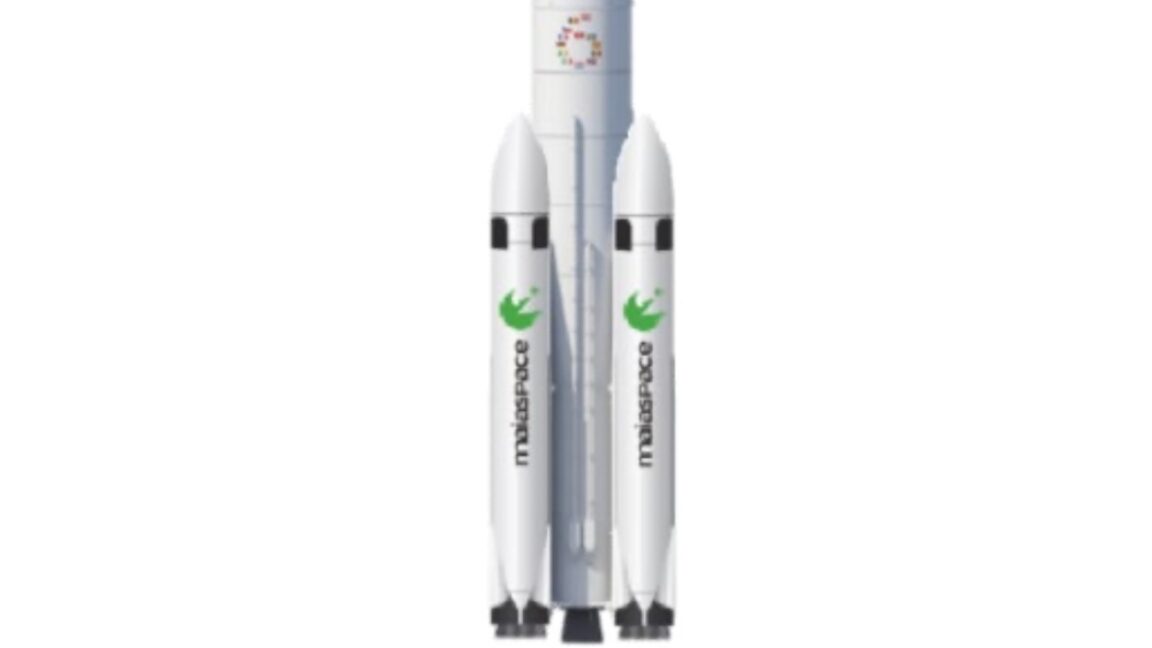
    In its submission to ESA’s BEST! initiative, ArianeGroup proposes replacing the Ariane 6 rocket’s solid-fueled side boosters with new liquid-fueled boosters. The boosters would be developed by MaiaSpace, a French subsidiary of ArianeGroup working on its own partially reusable small satellite launcher. MaiaSpace and ArianeGroup would convert the Maia rocket’s methane-fueled booster for use on the Ariane 6.

    Isar Aerospace’s concept for a reusable first stage booster (left) and ArianeGroup’s proposal for an Ariane 6 rocket with reusable strap-on boosters (right).

    Credit:
    ESA/Isar Aerospace/ArianeGroup

    Isar Aerospace’s concept for a reusable first stage booster (left) and ArianeGroup’s proposal for an Ariane 6 rocket with reusable strap-on boosters (right).


    Credit:

    ESA/Isar Aerospace/ArianeGroup

    ArianeGroup’s proposal was first reported by European Spaceflight, which said the concept presented to ESA is similar to an ArianeGroup proposal from 2022, when the company described the liquid reusable boosters as a “plug-and-play” alternative to Ariane 6’s solid-fueled boosters, helping reduce operating costs and increase launch rates.

    The details of ArianeGroup’s newest proposal have not been published, but the concept was summarized in a paper presented at the European Conference for Aeronautics and Space Sciences in 2025.

    Isar Aerospace, a German rocket startup, won a separate BEST! contract from ESA to study a demonstrator for a reusable first stage based on the company’s light-class Spectrum rocket. The Spectrum rocket’s initial design is expendable. Its first test flight last year ended in failure, and Isar is readying the second Spectrum rocket for another launch attempt later this month.

    ESA asked ArianeGroup and Isar Aerospace to assess the feasibility of their proposals, develop technology and system development plans, and define plans and costs for a “major flight demonstration.”

    MaiaSpace’s rocket won’t launch until 2027, at the earliest, and it’s unlikely any decision to use it as the basis for new Ariane 6 boosters will bear fruit until long after Maia flies on its own. Even if ESA and ArianeGroup take this route, the Ariane 6 rocket would still be predominantly expendable.


    Source link

  • SpaceX gets FCC permission to launch another 7,500 Starlink satellites

    SpaceX gets FCC permission to launch another 7,500 Starlink satellites


    T-Mobile is using Starlink in the US, and the satellite operator has partnerships with carriers overseas. With today’s FCC authorization, Starlink will be able to provide both fixed and mobile service from all 15,000 second-generation satellites.

    SpaceX wants to launch another 15,000 satellites

    SpaceX also recently struck a $17 billion deal to buy spectrum licenses from EchoStar, which will give it 50 Mhz of mobile spectrum and reduce its reliance on cellular carriers. SpaceX has been leasing 10 MHz of spectrum from T-Mobile to provide supplemental service in the US.

    Starlink is separately planning to launch yet another 15,000 satellites that are designed for mobile service. SpaceX asked the FCC to approve this plan in September 2025, saying the “new system will offer a new generation of MSS connectivity, supporting voice, texting, and high-speed data.”

    Starlink requests for FCC authorization often face opposition from other satellite firms, and the application for 15,000 more satellites is no exception. Viasat filed a petition to deny the application on Monday this week.

    “This proposed expansion of SpaceX’s operating authority would give it an even greater ability and incentive to foreclose other operators from accessing and using limited orbital and spectrum resources on a competitive basis,” Viasat told the FCC. “At the same time, the proposed operations would generate insurmountable interference risks for other spectrum users and the customers they serve, preclude other operators from accessing and using scarce spectral and orbital resources on an equitable basis, undermine and foreclose competition and innovation, and otherwise harm the public.”

    Globalstar also filed a petition to deny, and several other satellite operators raised objections. FCC Chairman Brendan Carr has generally been a supporter of SpaceX and Elon Musk, however. Carr alleged that the Biden administration targeted Musk’s companies for “regulatory harassment,” and in his current role as chairman Carr pressured EchoStar into selling the spectrum licenses that SpaceX is now buying.

    In today’s press release announcing the latest authorization, Carr said that “the FCC has given SpaceX the green light to deliver unprecedented satellite broadband capabilities, strengthen competition, and help ensure that no community is left behind.”


    Source link

  • Rocket Report: A new super-heavy launch site in California; 2025 year in review

    Rocket Report: A new super-heavy launch site in California; 2025 year in review


    International launches… China, which attempted 92 orbital launches in 2025, is second, followed by Russia, with 17 launches last year, and Europe with eight. Rounding out the 2025 orbital launch manifest were five orbital launch attempts from India, four from Japan, two from South Korea, and one each from Israel, Iran, and Australia, the analysis shows. The global launch tally has been on an upward trend since 2019, but the numbers may plateau this year. SpaceX expects to launch about the same number of Falcon 9 rockets this year as it did last year as the company prepares to ramp up the pace of Starship flights.

    The easiest way to keep up with Eric Berger’s and Stephen Clark’s reporting on all things space is to sign up for our newsletter. We’ll collect their stories and deliver them straight to your inbox.

    Sign Me
    Up!

    South Korean startup suffers launch failure. The first-ever commercial rocket launched at Brazil’s Alcantara Space Center crashed soon after liftoff on December 22, dealing a blow to Brazilian aerospace ambitions and the South Korean satellite launch company Innospace, Reuters reports. The rocket began its vertical trajectory as planned after liftoff but fell to the ground after something went wrong 30 seconds into its flight, according to Innospace, the South Korean startup that developed the launch vehicle. The craft crashed within a pre-designated safety zone and did not harm anyone, officials said.

    An unsurprising result... This was the first flight of Innospace’s nano-launcher, named Hanbit-Nano. The rocket was loaded with eight small payloads, including five deployable satellites, heading for low-Earth orbit. But rocket debuts don’t have a good track record, and Innospace’s rocket made it a bit farther than some new launch vehicles do. The rocket is designed to place up to 200 pounds (90 kilograms) of payload mass into Sun-synchronous orbit. It has a unique design, with hybrid engines consuming a mix of paraffin as the fuel and liquid oxygen as the oxidizer. Innospace said it intends to launch a second test flight in 2026. (submitted by EllPeaTea)

    Take two for Germany’s Isar Aerospace. Isar Aerospace is gearing up for a second launch attempt of its light-class Spectrum rocket after completing 30-second integrated static test firings for both stages late last year, Aviation Week & Space Technology reports. The endeavor would be the first orbital launch for Spectrum and an effort at a clean mission after a March 30 flight ended in failure because a vent valve inadvertently opened soon after liftoff, causing a loss of control. “Rapid iteration is how you win in this domain. Being back on the pad less than nine months after our first test flight is proof that we can operate at the speed the world now demands,” said Daniel Metzler, co-founder and CEO of Isar Aerospace.


    Source link

  • NASA orders “controlled medical evacuation” from the International Space Station

    NASA orders “controlled medical evacuation” from the International Space Station


    NASA officials said Thursday they have decided to bring home four of the seven crew members on the International Space Station after one of them experienced a “medical situation” earlier this week.

    The space agency has said little about the incident, and officials have not identified which crew member suffered the medical issue. James “JD” Polk, NASA’s chief health and medical officer, told reporters Thursday the crew member is “absolutely stable” but that the agency is “erring on the side of caution” with the decision to bring to return the astronaut to Earth.

    The ailing astronaut is part of the Crew-11 mission, which launched to the station August 1 and was slated to come back to Earth around February 20. Instead, the Crew-11 astronauts will depart the International Space Station (ISS) in the coming days and head for reentry and a parachute-assisted splashdown in the Pacific Ocean off the coast of California.

    After discussions with our chief health and medical officer, Dr. JD Polk, and leadership across the agency, I’ve come to the decision that it’s in the best interests of our astronauts to return Crew-11 ahead of their planned departure,” NASA Administrator Jared Isaacman said Thursday.

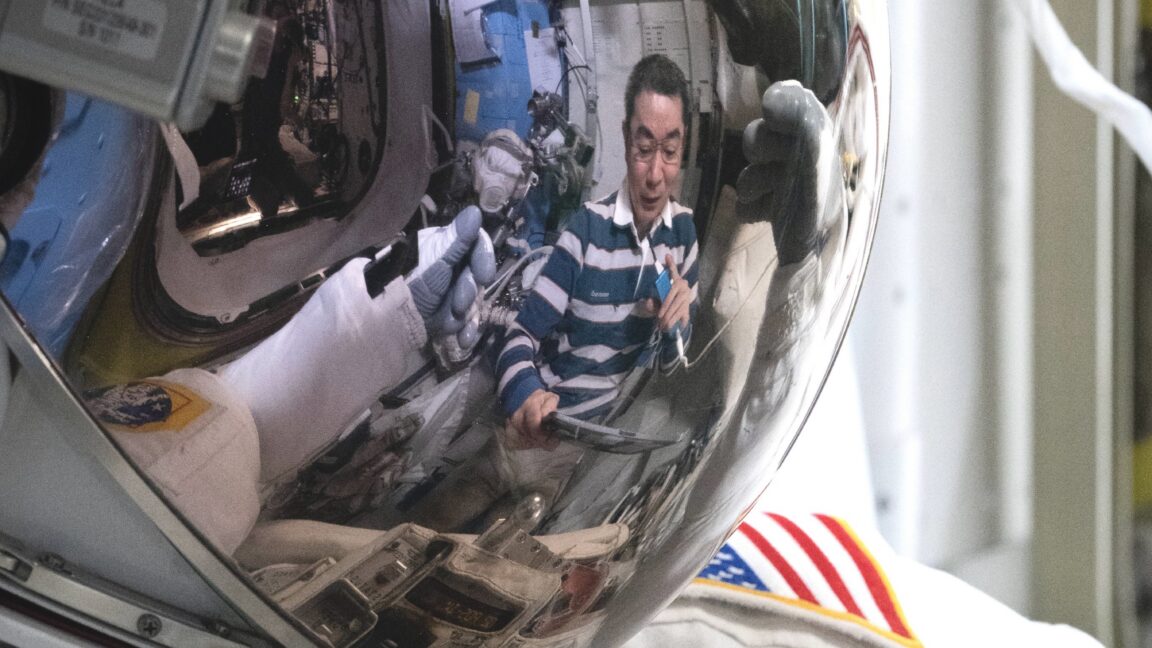
    The Crew-11 mission is led by commander Zena Cardman, 38, who is wrapping up her first mission to space. Second in command is pilot Mike Fincke, a 58-year-old astronaut on his fourth spaceflight. Japanese astronaut Kimiya Yui, 55, and Russian cosmonaut Oleg Platonov, 39, round out the crew.

    Isaacman said NASA will release more information about the schedule for Crew-11’s undocking and reentry within the next 48 hours. The crew will home home aboard the same SpaceX Crew Dragon spacecraft they launched in more than five months ago. The entire crew must return to Earth together because they rely on the same Dragon spacecraft as a lifeboat.

    “For over 60 years, NASA has set the standard for safety and security in crewed spaceflight,” Isaacman said. “In these endeavors, including the 25 years of continuous human presence onboard the International Space Station, the health and well-being of our astronauts is always and will be our highest priority.”

    From left to right: Crew-11 mission specialist Oleg Platonov, pilot Mike Fincke, commander Zena Cardman, and mission specialist Kimiya Yui. This photo was taken during training at SpaceX’s facility in Hawthorne, California.

    Credit:
    SpaceX

    From left to right: Crew-11 mission specialist Oleg Platonov, pilot Mike Fincke, commander Zena Cardman, and mission specialist Kimiya Yui. This photo was taken during training at SpaceX’s facility in Hawthorne, California.


    Credit:

    SpaceX

    Lingering risk

    Polk, a physician who has served as NASA’s chief medical officer since 2016, said the agency is not ready to release details about the medical issue, citing privacy concerns. “I’m not going to speak about any particular astronaut or any particular specific diagnosis,” Polk said. “I’d ask that we still respect the privacy of the astronaut.”


    Source link

  • Trump withdraws US from world’s most important climate treaty

    Trump withdraws US from world’s most important climate treaty


    The actual impact of the US withdrawal on many of the UN bodies singled out by Trump would depend on how aggressively his administration followed through on its announcement.

    The head of one of the UN bodies named in the executive order said that the full effect of the move would become clear only during the UN’s annual budget allocation process.

    “If they want to be difficult they could block the adoption of our budget. So it depends on how far they want to take it,” the person added.

    Although the list caused anguish among environmental groups, it did not go as far as originally envisaged on trade and economic matters after the administration quietly dropped the World Trade Organization and the OECD from its list of potential targets last year.

    In October, it emerged that Trump had authorized the payment of $25 million in overdue subscriptions to the WTO, despite the administration deriding the organization as “toothless” only a month previously.

    The list also did not include the International Maritime Organization despite the Trump administration’s successful—and diplomatically bruising—move last year to block the IMO’s plan to introduce a net zero framework for shipping.

    Sue Biniaz, the former US climate negotiator, said she hoped the retreat from the UNFCCC treaty was “a temporary one,” adding there were “multiple future pathways to rejoining the key climate agreements” in future.

    Stiell of the UNFCCC agreed: “The doors remain open for the US to re-enter in the future, as it has in the past with the Paris Agreement. Meanwhile the size of the commercial opportunity in clean energy, climate resilience, and advanced electrotech remains too big for American investors and businesses to ignore.”

    He added: “While all other nations are stepping forward together, this latest step back from global leadership, climate co-operation, and science can only harm the US economy, jobs, and living standards, as wildfires, floods, megastorms, and droughts get rapidly worse.”

    © 2026 The Financial Times Ltd. All rights reserved Not to be redistributed, copied, or modified in any way.


    Source link

  • A crew member’s “medical concern” foils a planned spacewalk outside the ISS

    A crew member’s “medical concern” foils a planned spacewalk outside the ISS


    A planned spacewalk outside the International Space Station has been postponed due to a “medical concern” with one of the crew members aboard the orbital complex, NASA announced Wednesday.

    The excursion was set to begin Thursday morning. Astronauts Mike Fincke and Zena Cardman planned to head outside the space station for six-and-a-half hours to prepare for the installation of new roll-out solar arrays set to arrive later this year. The arrival of the new solar arrays will be the final major upgrade to the lab’s electrical system before the space station’s decommissioning in 2030.

    Privacy paramount

    NASA said the crew member’s medical concern arose Wednesday afternoon, and officials will reschedule the spacewalk.

    “Due to medical privacy, it is not appropriate for NASA to share more details about the crew member,” the agency said in a statement. “The situation is stable. NASA will share additional details, including a new date for the upcoming spacewalk, later.”

    This was supposed to be the first of two spacewalks this month. On a second excursion next week, astronauts were expected to complete a series of maintenance tasks outside the station.


    Source link