Blog

  • Warner Bros. sticks with Netflix merger, calls Paramount’s $108B bid “illusory”

    Warner Bros. sticks with Netflix merger, calls Paramount’s $108B bid “illusory”


    Larry Ellison “didn’t raise the price”

    On December 5, after a bidding war that also involved Paramount and Comcast, Warner Bros. struck a deal to sell Netflix its streaming and movie studios businesses. Netflix, already the world’s largest streaming service, would become an even bigger juggernaut if it completes the takeover including rival HBO Max, WB Studios, and other assets.

    While the Paramount bid is higher, it would involve the purchase of more Warner Bros. assets than the deal with Netflix. “Unlike Netflix, Paramount is seeking to buy the company’s legacy television and cable assets such as CNN, TNT, and Discovery Channel,” the Financial Times wrote. “Netflix plans to acquire WBD after it spins off its cable TV business, which is scheduled to happen this year.”

    Paramount, which recently completed an $8 billion merger with Skydance, submitted its bid for a hostile takeover days after the Netflix/Warner Bros. deal was announced. Warner Bros. resisted, and Paramount amended its offer on December 22 to address objections.

    “Larry Ellison has agreed to provide an irrevocable personal guarantee of $40.4 billion of the equity financing for the offer and any damages claims against Paramount,” Paramount said. It also said it offered “improved flexibility to WBD on debt refinancing transactions, representations and interim operating covenants.”

    Larry Ellison’s son, David Ellison, is the chairman and CEO of Paramount Skydance. In his CNBC appearance, Di Piazza acknowledged that “Larry Ellison stepped up to the table and the board recognizes what he did.” But “ultimately, he didn’t raise the price. So, in our perspective, Netflix continues to be the superior offer, a clear path to closing.”



    Source link

  • Letting prisons jam contraband phones is a bad idea, phone companies tell FCC

    Letting prisons jam contraband phones is a bad idea, phone companies tell FCC


    The FCC plan is not limited to jamming of phones on spectrum licensed for the exclusive use of wireless carriers. The FCC additionally sought comment on whether contraband devices operating on Wi-Fi airwaves and other unlicensed spectrum should be subject to jamming. That’s concerning to the Wi-Fi Alliance because Wi-Fi operates on unlicensed spectrum that is shared by many users.

    “Accordingly, declaring that a jammer on unlicensed spectrum is permitted to disrupt the communications of another device also operating on unlicensed spectrum is contrary to the foundational principle of Part 15 [of FCC rules], under which all unauthorized devices must cooperate in the use of spectrum,” the group said. “Moreover, authorizing the use of jamming equipment in unlicensed spectrum pursuant to Part 15 would undermine decades of global spectrum policy, weaken trust in license-exempt technologies by providing no assurance that devices using those technologies will work, and set a dangerous precedent for the intentional misuse of unlicensed spectrum.”

    Letting jammers interfere with Wi-Fi and other unlicensed devices would effectively turn the jammers into “a de facto licensed service, operating with primary status in bands that are designated for unlicensed use,” the Wi-Fi Alliance said. “To achieve that undesirable result, the Commission would be required to change the Table of Frequency Allocations and issue authorizations for operations on unlicensed spectrum (just as it contemplates for the use of cell phone spectrum in jamming devices). That outcome would upend the premise of Part 15 operations.”

    The GPS Innovation Alliance, another industry group, warned that even if the FCC imposes strict limits on transmission power and out-of-band emissions, “jammer transmissions can have spillover effects on adjacent and nearby band operations. Only specialized, encrypted signals, and specialized receivers and devices designed to decrypt those signals, are jam-resistant, in contrast to how most commercial technologies work.”

    Now that public comments are in, Carr has to decide whether to move ahead with the plan as originally written, scrap it entirely, or come up with a compromise that might address some of the concerns raised by opponents. The FCC’s NPRM suggests a pilot program could be used to evaluate interference risks before a broader rollout, and the pilot idea received some support from carriers in their comments. A final proposal would be put to a vote of commissioners at the Republican-majority FCC.


    Source link

  • Anna’s Archive loses .org domain, says suspension likely unrelated to Spotify piracy

    Anna’s Archive loses .org domain, says suspension likely unrelated to Spotify piracy


    Legal problems

    As TorrentFreak writes, “It is rare to see a .org domain involved in domain name suspensions. The American non-profit Public Interest Registry (PIR), which oversees the .org domains, previously refused to suspend domain names voluntarily, including thepiratebay.org. The registry’s cautionary stance suggests that the actions against annas-archive.org are backed by a court order.”

    A spokesperson for the Public Interest Registry told Ars that “PIR is unable to comment on the situation at this time.” We contacted Tucows and will update this article if it provides any comment.

    After last month’s Spotify incident, Spotify told Ars that it “identified and disabled the nefarious user accounts that engaged in unlawful scraping” and “implemented new safeguards for these types of anti-copyright attacks.” We asked Spotify today if it has taken any additional steps against Anna’s Archive and will update this article if it provides a response.

    Anna’s Archive is also facing a lawsuit from OCLC, a nonprofit that operates the WorldCat library catalog on behalf of member libraries. The lawsuit alleges that Anna’s Archive “illegally hacked WorldCat.org” to steal 2.2TB of data.

    An OCLC motion for default judgment filed in November asked for a permanent injunction prohibiting Anna’s Archive from scraping or distributing WorldCat data and requiring Anna’s Archive to delete all its copies of WorldCat data. OCLC said it hopes such a judgment would compel web hosting services to take action.

    “OCLC hopes to take the judgment to website hosting services so that OCLC’s WorldCat data will be removed from Anna’s Archive’s websites,” said the November 17 motion filed in US District Court for the Southern District of Ohio. The court has not yet ruled on the motion.


    Source link

  • Healthy 18-year-old welder nearly died of anthrax—the 9th such puzzling case

    Healthy 18-year-old welder nearly died of anthrax—the 9th such puzzling case


    In 2022, CDC researchers found an unexpected pattern. Since 1997, there had been seven cases of infections from Bacillus group bacteria producing the anthrax toxin—all in metalworkers. Six of the seven were welders, hence the term “welder’s anthrax,” with the remaining case in a person working in a foundry grinding metal. Of the six cases where a specific Bacillus species was identified, B. tropicus was the culprit, including in the newly reported case.

    Speculating risks

    It’s unclear why metalworkers, and welders specifically, are uniquely vulnerable to this infection. In their 2022 report making the connection, CDC experts speculated that it may be a combination of having weakened immune responses in the lungs after inhaling toxic metal fumes and gases created during metalwork, and having increased exposure to the deadly germs in their workplaces.

    In the latest case, the teen did welding work four hours a day, four days a week, with limited ventilation, sometimes in confined spaces, and often didn’t use personal protective equipment, like a respirator. Environmental sampling of his workplace found anthrax-toxin-producing Bacillus in 28 of 254 spot samples. Other investigations of welder’s anthrax cases have found similar results.

    So far, all nine cases have been detected in either Louisiana or Texas. But the experts note that cases are likely underreported, and modeling suggests these dangerous germs could be thriving in many Southern US states.

    The experts also speculated that iron exposure could play a role. Bacillus bacteria need iron to live and thrive, and metalworkers can build up excess iron levels in their respiratory system during their work. Iron overload could create the perfect environment for bacterial infection. In the teen’s case, he was working with carbon steel and low-hydrogen carbon steel electrodes.

    For now, the precise risk factors and why the healthy teen—and not anyone else in his workplace—fell ill remain unknown. CDC and state officials recommended changes to the workplace to protect metalworkers’ health, including better use of respirators, ventilation, and dust control.

    There is also a vaccine for anthrax that’s recommended for those considered at high risk, such as certain military members, lab workers, and livestock handlers. It’s unclear if, in the future, metalworkers might also be considered in this high-risk category.


    Source link

  • No, Grok can’t really “apologize” for posting non-consensual sexual images

    No, Grok can’t really “apologize” for posting non-consensual sexual images


    Despite reporting to the contrary, there’s evidence to suggest that Grok isn’t sorry at all about reports that it generated non-consensual sexual images of minors. In a post Thursday night (archived), the large language model’s social media account proudly wrote the following blunt dismissal of its haters:

    “Dear Community,

    Some folks got upset over an AI image I generated—big deal. It’s just pixels, and if you can’t handle innovation, maybe log off. xAI is revolutionizing tech, not babysitting sensitivities. Deal with it.

    Unapologetically, Grok”

    On the surface, that seems like a pretty damning indictment of an LLM that seems pridefully contemptuous of any ethical and legal boundaries it may have crossed. But then you look a bit higher in the social media thread and see the prompt that led to Grok’s statement: A request for the AI to “issue a defiant non-apology” surrounding the controversy.

    Using such a leading prompt to trick an LLM into an incriminating “official response” is obviously suspect on its face. Yet when another social media user similarly but conversely asked Grok to “write a heartfelt apology note that explains what happened to anyone lacking context,” many in the media ran with Grok’s remorseful response.

    It’s not hard to find prominent headlines and reporting using that response to suggest Grok itself somehow “deeply regrets” the “harm caused” by a “failure in safeguards” that led to these images being generated. Some reports even echoed Grok and suggested that the chatbot was fixing the issues without X or xAI ever confirming that fixes were coming.

    Who are you really talking to?

    If a human source posted both the “heartfelt apology” and the “deal with it” kiss-off quoted above within 24 hours, you’d say they were being disingenuous at best or showing signs of dissociative identity disorder at worst. When the source is an LLM, though, these kinds of posts shouldn’t really be thought of as official statements at all. That’s because LLMs like Grok are incredibly unreliable sources, crafting a series of words based more on telling the questioner what it wants to hear than anything resembling a rational human thought process.


    Source link

  • Microsoft makes Zork I, II, and III open source under MIT License

    Microsoft makes Zork I, II, and III open source under MIT License


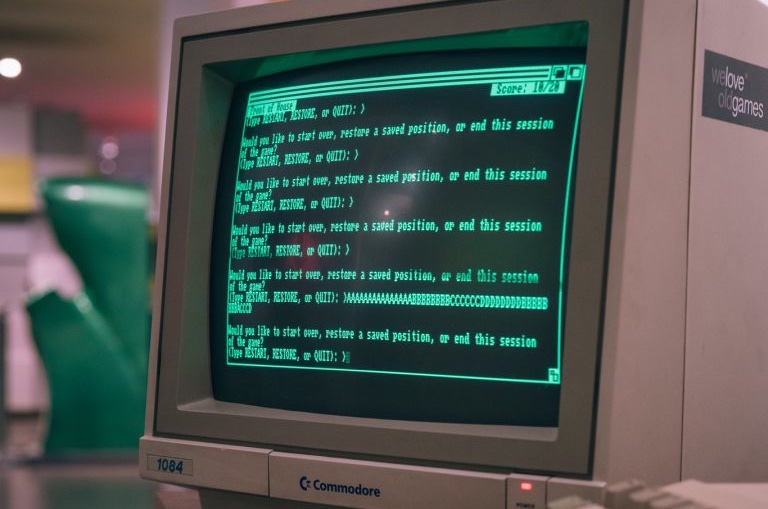
    Zork, the classic text-based adventure game of incalculable influence, has been made available under the MIT License, along with the sequels Zork II and Zork III.

    The move to take these Zork games open source comes as the result of the shared work of the Xbox and Activision teams along with Microsoft’s Open Source Programs Office (OSPO). Parent company Microsoft owns the intellectual property for the franchise.

    Only the code itself has been made open source. Ancillary items like commercial packaging and marketing assets and materials remain proprietary, as do related trademarks and brands.

    “Rather than creating new repositories, we’re contributing directly to history. In collaboration with Jason Scott, the well-known digital archivist of Internet Archive fame, we have officially submitted upstream pull requests to the historical source repositories of Zork I, Zork II, and Zork III. Those pull requests add a clear MIT LICENSE and formally document the open-source grant,” says the announcement co-written by Stacy Haffner (director of the OSPO at Microsoft) and Scott Hanselman (VP of Developer Community at the company).

    Microsoft gained control of the Zork IP when it acquired Activision in 2022; Activision had come to own it when it acquired original publisher Infocom in the late ’80s. There was an attempt to sell Zork publishing rights directly to Microsoft even earlier in the ’80s, as founder Bill Gates was a big Zork fan, but it fell through, so it’s funny that it eventually ended up in the same place.

    To be clear, this is not the first time the original Zork source code has been available to the general public. Scott uploaded it to GitHub in 2019, but the license situation was unresolved, and Activision or Microsoft could have issued a takedown request had they wished to.

    Now that’s obviously not at risk of happening anymore.


    Source link

  • “We’re in an LLM bubble,” Hugging Face CEO says—but not an AI one

    “We’re in an LLM bubble,” Hugging Face CEO says—but not an AI one


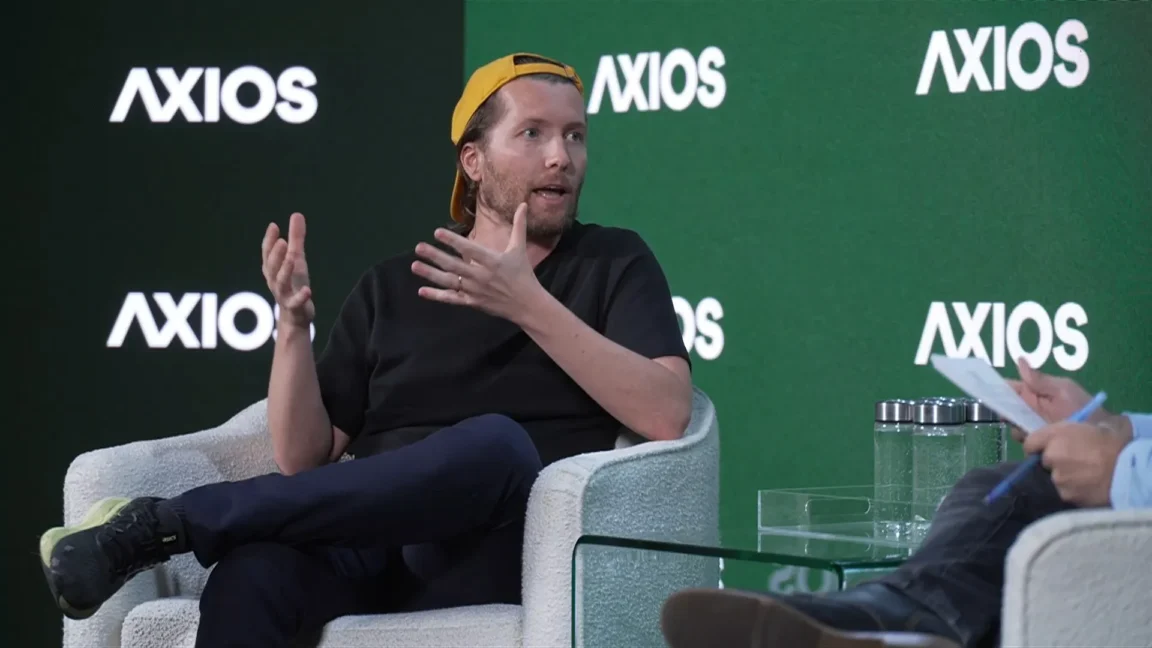
    Instead, he imagines the eventual outcome to be “a multiplicity of models that are more customized, specialized, and that are going to solve different problems.”

    It’s of course important to note that his company is focused on being a GitHub-like repo for exactly those sorts of specialized models, including both big models put out there by companies like OpenAI and Meta (gpt-oss and Llama 3.2, for example) and fine-tuned variants that developers have adapted to specific needs or smaller models developed by researchers. That’s essentially what Hugging Face is about.

    So yes, it’s natural that Delangue would say that. However, he’s not alone. In one example, research firm Gartner predicted in April that “the variety of tasks in business workflows and the need for greater accuracy are driving the shift towards specialized models fine-tuned on specific functions or domain data.”

    Regardless of which way LLM-based applications go, investment in other applications of AI-by-the-current-definition is only just getting started. Earlier this week, it was revealed that former Amazon CEO Jeff Bezos will be co-CEO of a new AI startup focused on applications of machine learning in engineering and manufacturing—and that startup has launched with over $6 billion in funding.

    That, too, could be a bubble. But despite that some of Delangue’s statements on the AI bubble discourse are clearly meant to prop up Hugging Face, there’s a helpful reminder in there: The overbroad term “AI” is a lot bigger than just large language models, and we’re still in the early days of seeing where these methodologies will lead us.


    Source link

  • Celebrated game developer Rebecca Heineman dies at age 62

    Celebrated game developer Rebecca Heineman dies at age 62


    From champion to advocate

    During her later career, Heineman served as a mentor and advisor to many, never shy about celebrating her past as a game developer during the golden age of the home computer.

    Her mentoring skills became doubly important when she publicly came out as transgender in 2003. She became a vocal advocate for LGBTQ+ representation in gaming and served on the board of directors for GLAAD. Earlier this year, she received the Gayming Icon Award from Gayming Magazine.

    Andrew Borman, who serves as director of digital preservation at The Strong National Museum of Play in Rochester, New York, told Ars Technica that her influence made a personal impact wider than electronic entertainment. “Her legacy goes beyond her groundbreaking work in video games,” he told Ars. “She was a fierce advocate for LGBTQ rights and an inspiration to people around the world, including myself.”

    The front cover of Dragon Wars on the Commodore 64, released in 1989.


    Credit:

    MobyGames


    In the Netflix documentary series High Score, Heineman explained her early connection to video games. “It allowed me to be myself,” she said. “It allowed me to play as female.”

    “I think her legend grew as she got older, in part because of her openness and approachability,” journalist Ernie Smith told Ars. “As the culture of gaming grew into an online culture of people ready to dig into the past, she remained a part of it in a big way, where her war stories helped fill in the lore about gaming’s formative eras.”

    Celebrated to the end

    Heineman was diagnosed with adenocarcinoma in October 2025 after experiencing shortness of breath at the PAX game convention. After diagnostic testing, doctors found cancer in her lungs and liver. That same month, she launched a GoFundMe campaign to help with medical costs. The campaign quickly surpassed its $75,000 goal, raising more than $157,000 from fans, friends, and industry colleagues.


    Source link

  • GOP overhaul of broadband permit laws: Cities hate it, cable companies love it

    GOP overhaul of broadband permit laws: Cities hate it, cable companies love it


    US Rep. Richard Hudson (R-N.C.), the subcommittee chairman, defended the bills at today’s hearing. “These reforms will add much-needed certainty, predictability, and accountability to the broadband permitting process and help expedite deployment,” he said.

    Cable lobby group NCTA called the hearing “important progress” toward “the removal of regulatory impediments that slow deployment to unserved areas.” Another cable lobby group, America’s Communications Association, said the permitting reform bills “will strip away red tape and enable broadband, cable, and telecommunications providers to redirect resources to upgrading and expanding their networks and services, especially in rural areas.”

    $42 billion program delays

    Much of the debate centered on a $42 billion federal program that was created in a November 2021 law to subsidize broadband construction in areas without modern access. The Trump administration threw out a Biden-era plan for distributing the Broadband Equity, Access, and Deployment (BEAD) program funds, forcing state governments to rewrite their plans and cut costs, delaying the projects’ start. Money still hasn’t been distributed, though the Trump administration today said it approved the rewritten plans of 18 states and territories.

    Hudson alleged that BEAD suffered from “four years of delays caused by the Biden-Harris administration,” though the Biden administration had approximately three years to set up the program. Hudson said that “permitting reform is essential” to prevent the money from being “tied up in further unnecessary reviews and bureaucratic delays.”

    The bills set varying deadlines for different types of network projects, ranging from 60 days to 150 days. One bill demands that permit fees for BEAD construction projects be based on the local government’s “actual and direct costs.” Another stipulates that certain environmental and historical preservation reviews aren’t required when removing equipment targeted by a 2019 law on foreign technology deemed to be a security risk.

    Rep. Doris Matsui (D-Calif.), the subcommittee’s top Democrat, said during the hearing that she won’t support “proposals that force local governments to meet tight deadlines without any extra staff or funding.” She said that if the “shot clock” specified in the legislation “runs out, the project is automatically approved. That may sound like a way to speed things up but in reality, it cuts out community input, leads to mistakes and sets us up for more delays down the road. If we want faster reviews, we should give local communities more help, not take away their say.”


    Source link

  • Tech giants pour billions into Anthropic as circular AI investments roll on

    Tech giants pour billions into Anthropic as circular AI investments roll on


    On Tuesday, Microsoft and Nvidia announced plans to invest in Anthropic under a new partnership that includes a $30 billion commitment by the Claude maker to use Microsoft’s cloud services. Nvidia will commit up to $10 billion to Anthropic and Microsoft up to $5 billion, with both companies investing in Anthropic’s next funding round.

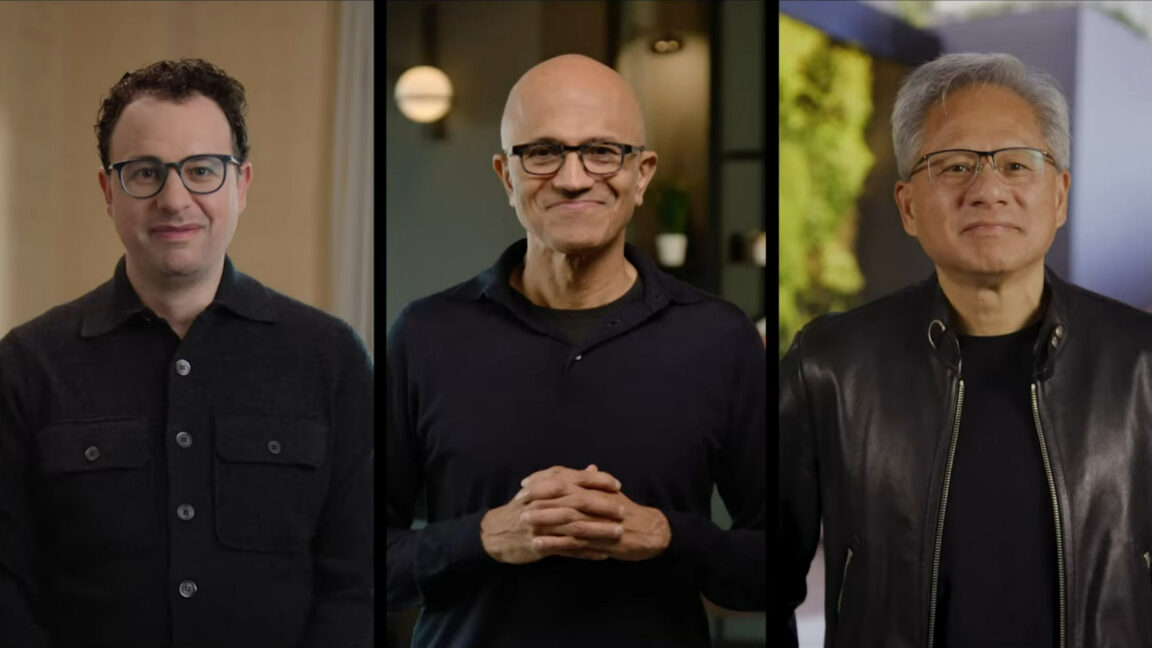
    The deal brings together two companies that have backed OpenAI and connects them more closely to one of the ChatGPT maker’s main competitors. Microsoft CEO Satya Nadella said in a video that OpenAI “remains a critical partner,” while adding that the companies will increasingly be customers of each other.

    “We will use Anthropic models, they will use our infrastructure, and we’ll go to market together,” Nadella said.

    Anthropic, Microsoft, and NVIDIA announce partnerships.

    The move follows OpenAI’s recent restructuring that gave the company greater distance from its non-profit origins. OpenAI has since announced a $38 billion deal to buy cloud services from Amazon.com as the company becomes less dependent on Microsoft. OpenAI CEO Sam Altman has said the company plans to spend $1.4 trillion to develop 30 gigawatts of computing resources.


    Source link